Studio
The TC Studio
Where the music was made. Everything was done in-house from 1997, from writing and producing to mixing and mastering, in a series of studios: as the band's own pages and posts described them, with what was in them and how it changed.
- Studios
- 9
- Years
- 1997–today
- Pieces of gear
- 86
All the gear, piece by pieceThe studio today
1997–1998
The first setup
"DjC started composing simple tracks using MIDI in his bedroom and when WennE who by then was a tracker boy came for a visit the whole project started to grow." What they used: "A PC computer, no-name 386 DX 40, using a SoundBlaster AWE 32 soundcard equiped with 2 mb RAM and a plastic MIDI Keyboard using Commodore Audio as a sequencer software. Pretty primitive stuff but they worked."
- Before 1997WennE has been making techno of his own since the age of 15, "using different tracker programs such as Fasttracker using an Atari 1040". Source →
- Second half of 1997"trance[]control, an amateur basement project, was founded during the second half of 1997", on "a crap computer (PC 386, 40 MHz, it sucked even back then…), a midi keyboard and the famous pink noise generating, Soundblaster AWE 32". Source →
- Then"The first solution was to purchase a new soundcard, a Soundblaster AWE 64 Gold equipped with 12 Mb RAM to load samples!" Source →
- Then"Thought and done, the first real synthesizer was purchased ( Yamaha CS1x )". Reading up on it, they found the CS1x Archive and mailed it their own tracks: "the first step towards the WWW was taken." Source →
- Later"Later on another synthesizer was purchased, a Roland MC-303 and the computer was replaced with a Pentium class PC (166 MHz). Shortly after that one an Alesis Quadrasynth arrived (A kind of expensive period to Alex who paid for all of it but hey, a hobby is a hobby)." Source →
- 1998After "learning how to handle Steinberg Cubase Audio VST" they sent out their first demo, and on 18 October 1998 they signed with Frontline Publishing. Source →
What was in it · 11 pieces
Synths, samplers and drum machines
- Alesis QuadraSynth
- Roland MC-303 Groovebox
- Yamaha CS1xThe first real synthesizer.
Samplers
- Sound Blaster AWE32 with 2 MB RAMUsed as the sampler, in both the 386 and the 486.
- Sound Blaster AWE64 Gold with 12 MB RAMBought "to load samples".
Computer and control
- PC, 386 DX40, 4 MB RAM, 40 MB hard diskThe first computer, on which the first track, Another Beat, was made with a Sound Blaster AWE32. Alexander wrote in 2003 that it had 4 MB RAM; an earlier account gave 512 KB.
- PC, 486 SX25The second computer.
- PC, Pentium 166 MHz
- Plastic MIDI keyboard
Software
- Commodore Audio sequencer
- Steinberg Cubase Audio VST
1999–2000
The TC Studio
The studio as the band listed it on its first website, at Teraxis, while Atomic Dance Explosion topped the MP3.com charts.
- 28 November 1998"Finaly we've got some pictures from our current studio and ourselves!" Source →
- 13 January 1999"We've bought a new studio! ... Well... almost. New mixerdesk and a new recording equipment and some new synths." On their way that week: "a brand new Waldorf Pulse module and a RØDE NT 1 Microphone". Source →
- 22 February 1999"The studio page was updated! New pictures of our spot in the universe and our new equipment!" Source →
- 25 March 1999With Atomic Dance Explosion at No. 1 on MP3.com: "The pay check for the CD sales just arrived and we're gonna use the monney to rebuild our garage and turn it into a studio as a tribute to our fans." Source →
- May 1999The studio page as archived in May 1999 lists the Yamaha CS1x and a Fostex DMT8-VL hard-disk recorder ("3,2 Gb"), with a Pentium II 300 and a Cyrix 166+ as the computers. Source →
- October 1999By October the list has a Novation Nova on order ("It's still on order since it's not avalable yet... but soon"), a Yamaha CS2x where the CS1x had been, a new Pentium II 400 with 512 MB RAM, and no Fostex. Source →
- March 2000The band's MP3.com page gives its instruments as "Yamaha DSP Factory, Yamaha 01V, Yamaha CS1x, Yamaha A3000, Novation Drumstation V2, Novation NOVA, Syntecno TB 303 (Mk III), Clavia Nordrack 1(OS 2.0, Voice Expanded) Waldorf Pulse". Source →
- May 2000"trance[]control has got a studio of their own owned by DjC. It's located in the west coast of Sweden." Source →
What was in it · 26 pieces
Synths, samplers and drum machines
- Clavia Nord Rack (voice expanded)
- Korg P3 (piano module)
- Novation Drumstation V2
- Novation Nova"It's still on order since it's not avalable yet... but soon"
- Syntecno TeeBee 303 (TB-303 clone)
- Waldorf PulseAnnounced as incoming on 1999-01-13.
- Yamaha CS2x
- Yamaha CS1xDjC's first real synth, after a SoundBlaster card: "The CS1x became the point of no return in the history of the TC Studio."
Computer and control
- Cyrix 166+, 64 MB RAMControl station for the Yamaha A3000.
- Pentium II 300, 192 MB RAM"WebMastering & MP3-handling"
- Pentium II 400, 512 MB RAMMain sequencing computer.
Sound cards and controllers
Recording
- Fostex DMT8-VL recorder (3.2 GB)Listed in May 1999; gone from the list by October.
- Yamaha DSP Factory
Mixers and outboard
Microphones
- RØDE NT1 studio microphone
- Shure BG 1.0"(Silly-poor-bad-sounding-crap-microphone)"
Monitoring
- Audio Pro B 1.39 active subwoofer"Bad Ass WOOFER that tears the place down"
- Avance Epsilon 910 monitors
- NAD 216 THX power amplifier
2001–2002
The Storage Room
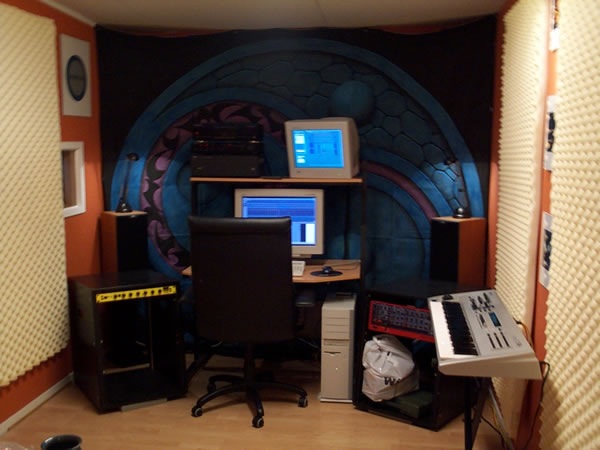
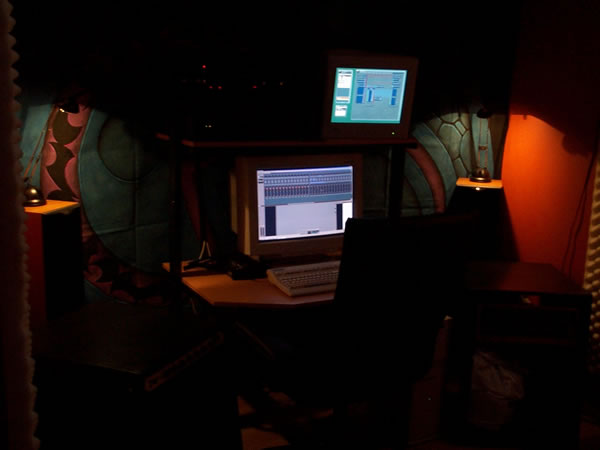
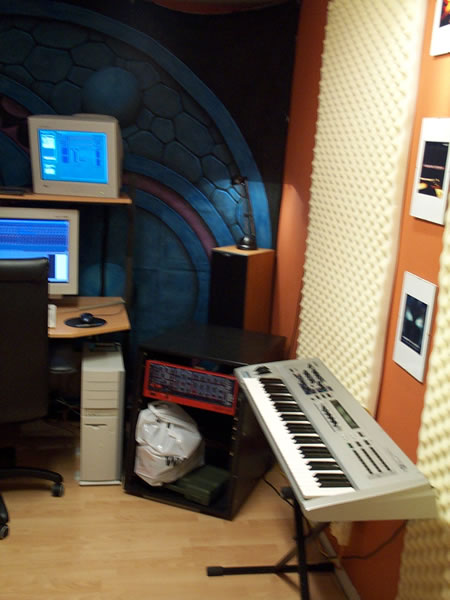
"These days most producers out there move towards a 'synthesizer free' studio ... We on the other hand don't." A webcam, the Studio CAM, sent video and sound from the studio around the clock.
- July 2001The Storage Room page as archived in July 2001 lists Avance Epsilon 910 monitors, Propellerhead Reason, and the computer as "PC, Windows 98, PIII 933 @ 1Ghz w/ 512 Mb RAM" with a "Dual Monitor setup (2x17")". Source →
- August 2001"Check out the studio LIVE right now! We've mounted a webcam sending out both video and audio around the clock": the Studio CAM. Source →
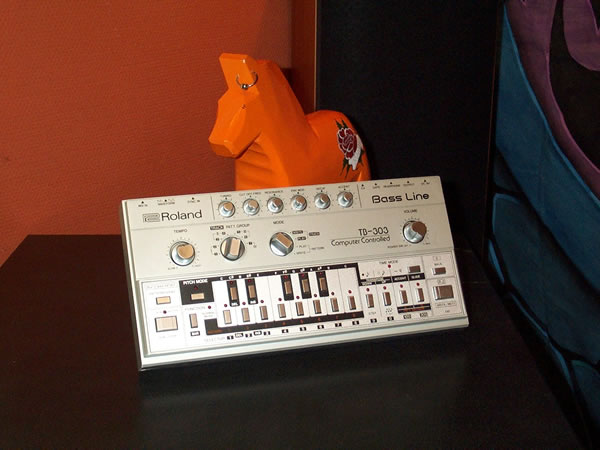
- December 2001In December the list adds an Oberheim OB12, a Roland TB303, the Yamaha AN1x plug-in board for the CS6x and a Yamaha DSP Factory card. B&W DM602-S2 monitors have replaced the Avance pair, and Reason is no longer listed. Source →
- February 2002The DSP Factory is gone from the list. The page then stays exactly the same on every archived copy up to August 2003, months after the burglary. Source →
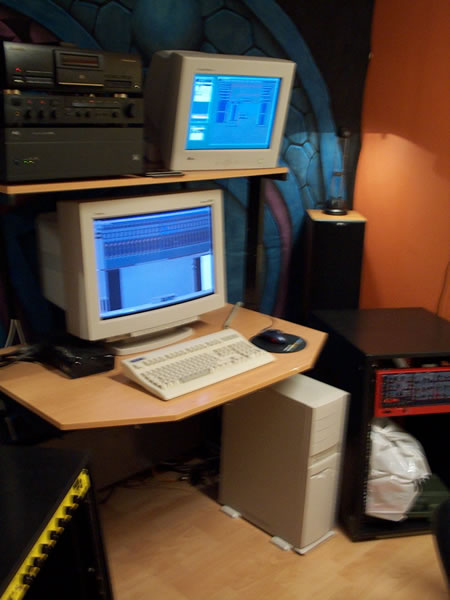
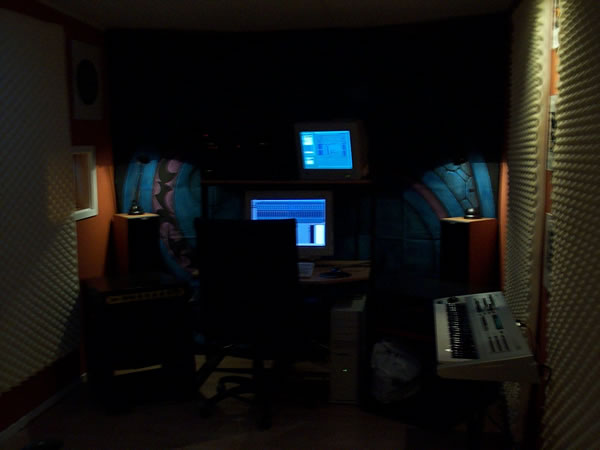
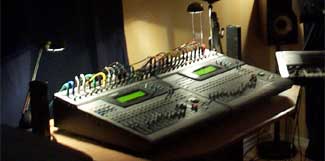
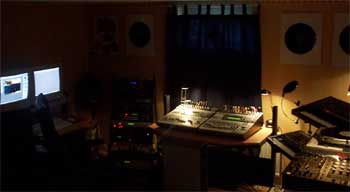
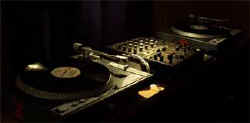
What was in it · 32 pieces
Synths, samplers and drum machines
- AKAI S2000
- Clavia Nordrack
- Jomox Airbase 99
- Korg MS2000
- Novation Drumstation V2
- Novation Nova
- Oberheim OB12First listed in December 2001.
- Roland JP-8080
- Roland Juno 106
- Roland TB303First listed in December 2001.
- Syntecno TeeBee MKII
- Waldorf Pulse
- Yamaha A3000
- Yamaha AN1x (CS6x plug-in board)First listed in December 2001.
- Yamaha CS6x
Computer and control
- Emagic Logic Audio Gold
- Opcode Studio 128x MIDI interface
- PC, Pentium III 933 MHz
- Two 17″ computer monitors
Mixers and outboard
Monitoring
- Audio Pro subwoofer
- Avance Epsilon 910 monitorsListed in summer 2001; replaced by the B&W DM602-S2 pair by December.
- B&W DM602-S2 monitorsListed from December 2001, in place of the Avance Epsilon 910.
- NAD 216 THX power amp (2 × 125 W)
Software
- Propellerhead ReasonListed in summer 2001, not in December.
Studio CAM
- Logitech QuickCam Pro 3000 (Studio CAM)Live video and camera-microphone audio from the studio, distributed through DI.FM. Codec and protocol not yet confirmed.
January 2003
Stolen
In the night between 13 and 14 January 2003, between 01:15 and 02:30, the studio was broken into and robbed clean, and so were three other studios on the same floor. Gone were the computer with about three years of original work, the synths and the power amp, worth about 85,000 SEK; the insurance did not cover it. On request from listeners the band set up donations to rebuild the studio: $392.25 by February 2003.
What was in it · 7 pieces
Stolen
- 14" TV/VCR
- 2 × Creamware Pulsar II cards
- Clavia Nordrack, fully expanded
- Computer with about 120 GB of work and samples (three years' worth)
- NAD 216 THX power amp
- Roland TB303
- Sony 24″ 16:9 CRT computer monitor
2003
Starting over
"Our aim is to re-build an environement similar to the one we had, though with a less expencive soundcard & a more powerfull computer. Hopefully we'll also be able to get a few decent synths once we get back on our own feet."
- February 2003Listeners have donated $392.25 to rebuild the studio. Source →
- 12 April 2003Donations reach $1,169.58, and the new computer is "RUNNING IN THE STUDIO!": an Intel P4 at 2.4 GHz with 1024 MB RAM and a 120 GB disk. Next on the list is a Creamware Luna II sound card. Source →
- August 2003The band's studio page says only: "Our whole studio was stolen from us on the night between JAN13 & JAN14, 2003." It still does in September 2004. Source →
- 26 September 2003Alex describes the band's mastering, "all in Logic": a slight compression with the Waves Renaissance Compressor, a steep high-pass at 28–36 Hz, the Emagic Exciter, a VST stereo expander and the Waves L2 maximizer. Steinberg WaveLab did it before.
- 14 October 2003The studio, as Alex lists it: the P4 with an Emagic Audiowerk 8 card, a MIDI keyboard, Emagic Logic Audio, "A huge load of VSTinstruments & FX" and "A mad collection of AKAI CD's".
- 27 October 2003The softsynths: "V-Station, Tau2, Reaktor, FM7, Pro-53, EXS24, ES2, ES1, Atmosphere, Stylus, Trilogy and a whole lot more..."
- 10 November 2003Alex previews a track that "features our new TB-303 clone (Bass Line by Aduiorealism - www.audiorealism.se)". Source →
- 13 November 2003"WennE has been to the studio to play with our new friend 'Bass Line' from Audiorealism... The outcome is what you get by putting a madman in a room with a TB-303, some hard drumsamples and a distortion effect..." Source →
- 9 May 2004The band's gear list: the P4, a Roland JP-8000 synth, Logic for sequencing, AKAI sample CDs and some VST instruments.
- 9 July 2004"We teamed up with a friend a few months ago to split the rent @ the studio, so yeah - we're now glad to finally run on a Creamware base again".
What was in it · 9 pieces
Synths, samplers and drum machines
- Roland JP-8000On the band's gear list of 9 May 2004; a different machine from the JP-8080 of 2001.
Computer and control
- PC, Intel P4 2.4 GHz (ASUS P4PE, 1024 MB DDR RAM, 120 GB disk)Bought with listeners' donations.
Sound cards and controllers
- Emagic Audiowerk 8The sound card in the new P4, October 2003.
- MIDI keyboard
Software
- AKAI sample CDs"A mad collection of AKAI CD's".
- Audiorealism Bass Line (TB-303 emulation)
- Emagic Logic AudioSequencing, mixing and mastering.
- Mastering in Logic: Waves Renaissance Compressor and L2, Emagic Exciter, a VST stereo expanderSteinberg WaveLab had done the mastering before.
- Softsynths: V-Station, Tau2, Reaktor, FM7, Pro-53, EXS24, ES2, ES1, Atmosphere, Stylus, Trilogy
On the wish list: Creamware Luna II.
2012 · Central Gothenburg
The new studio
"The studio is a 3×4 meter soundproofed room located in the central parts of Gothenburg, Sweden." Set up as Alex relaunched trance[]control, around a computer and Logic Pro.
What was in it · 8 pieces
2012–2015
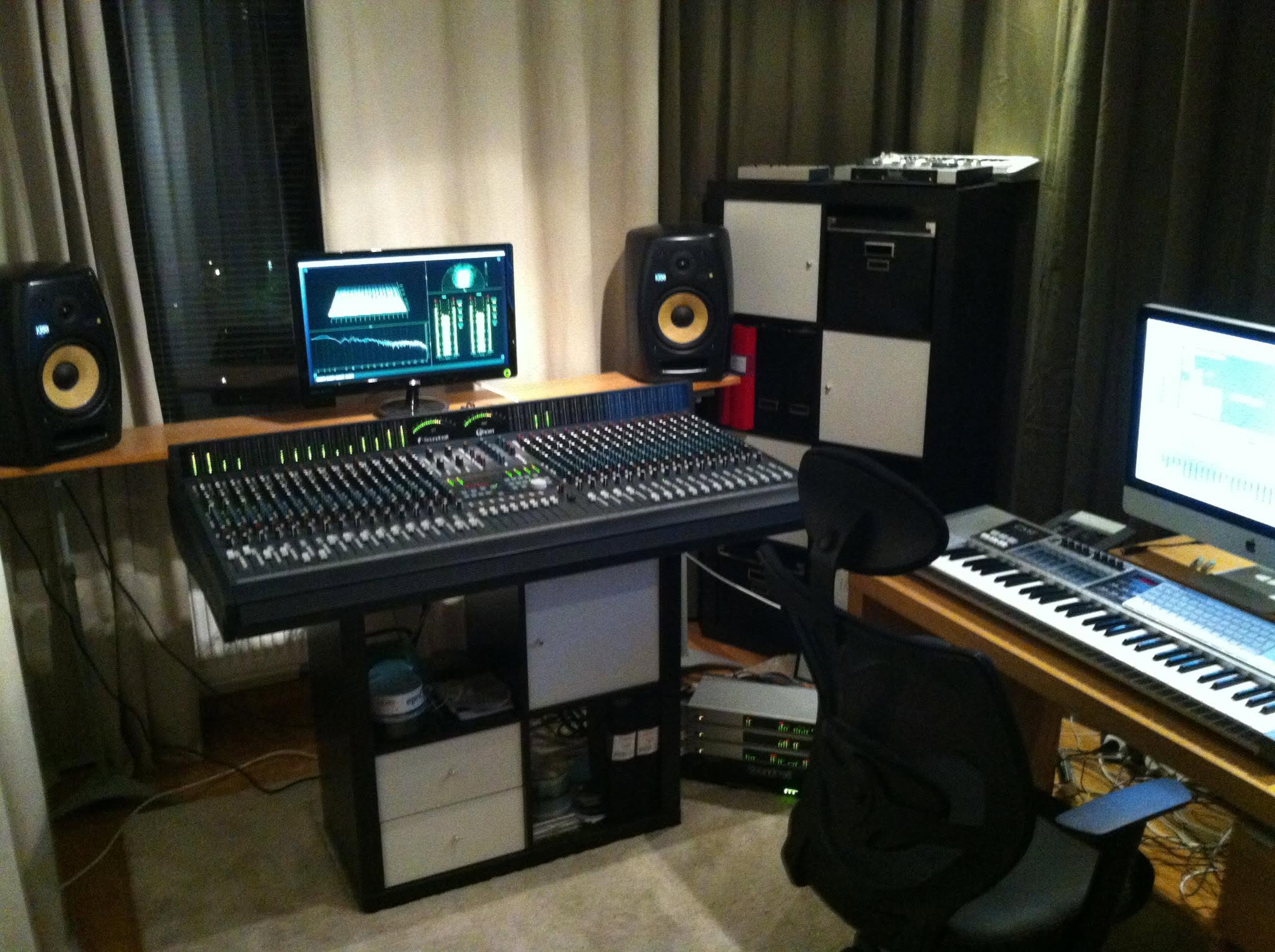
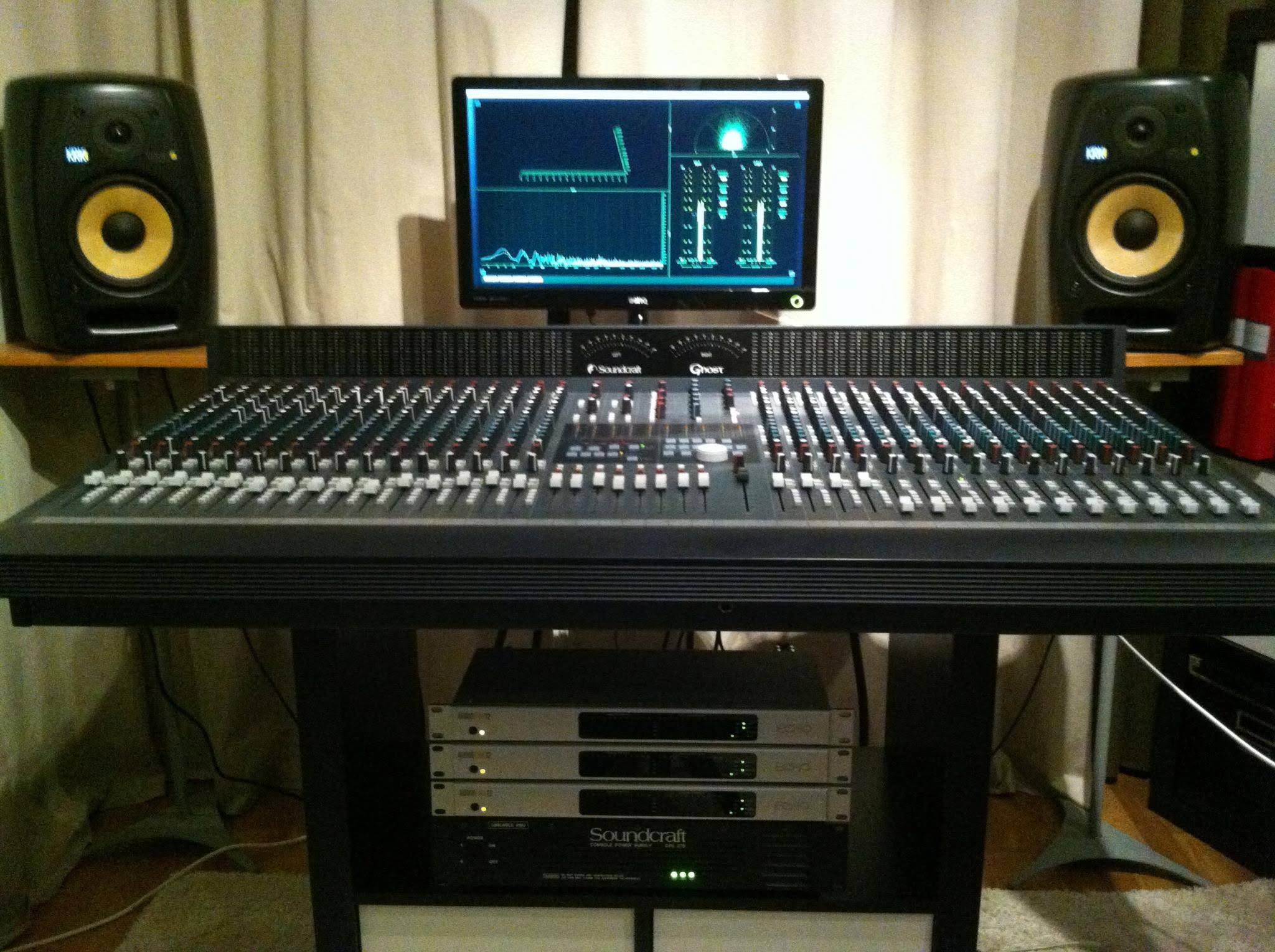
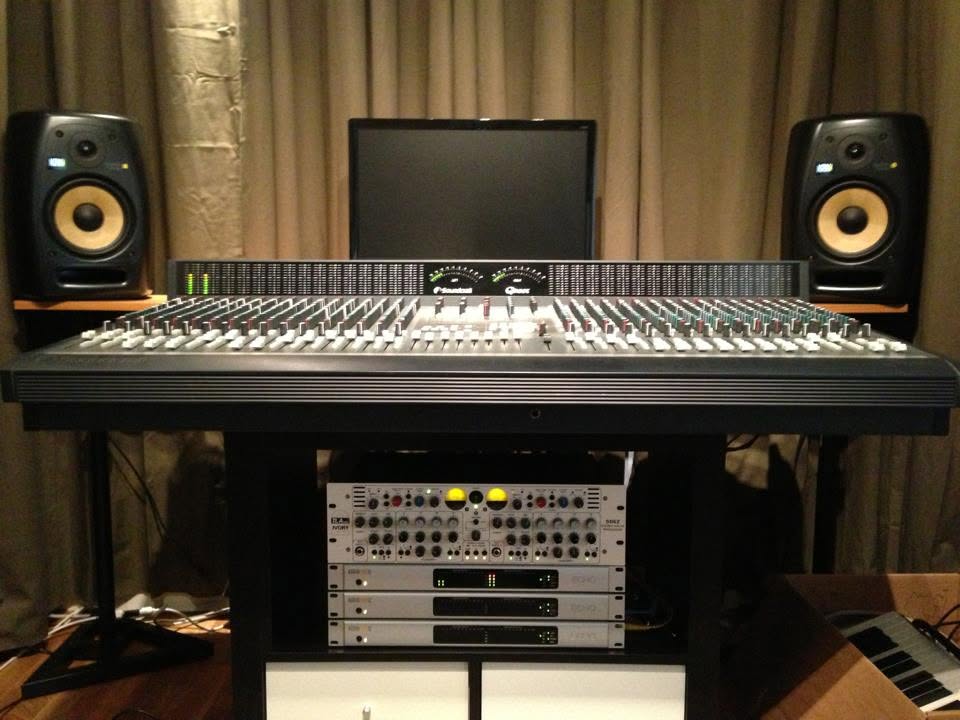
With the Soundcraft Ghost
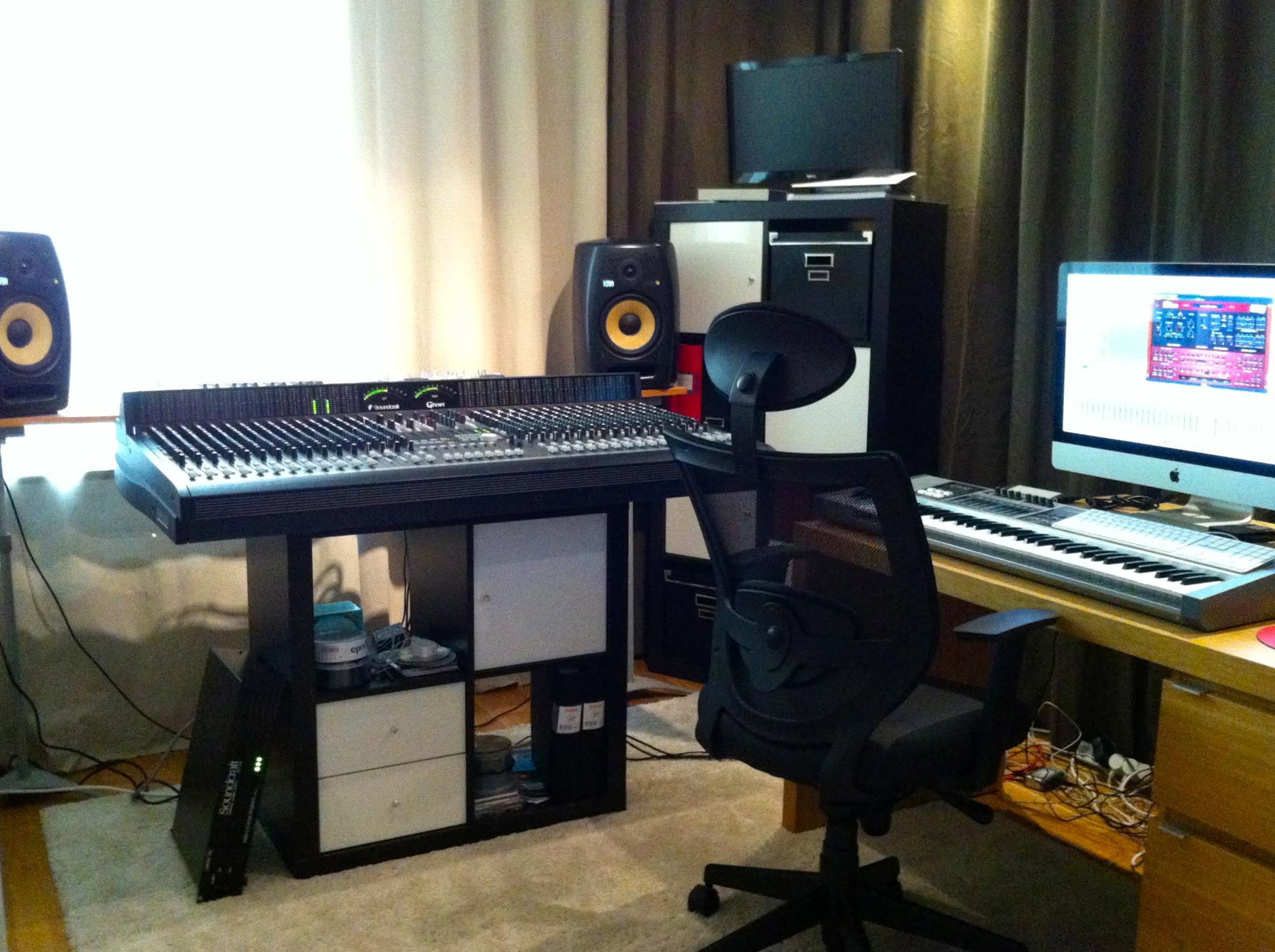
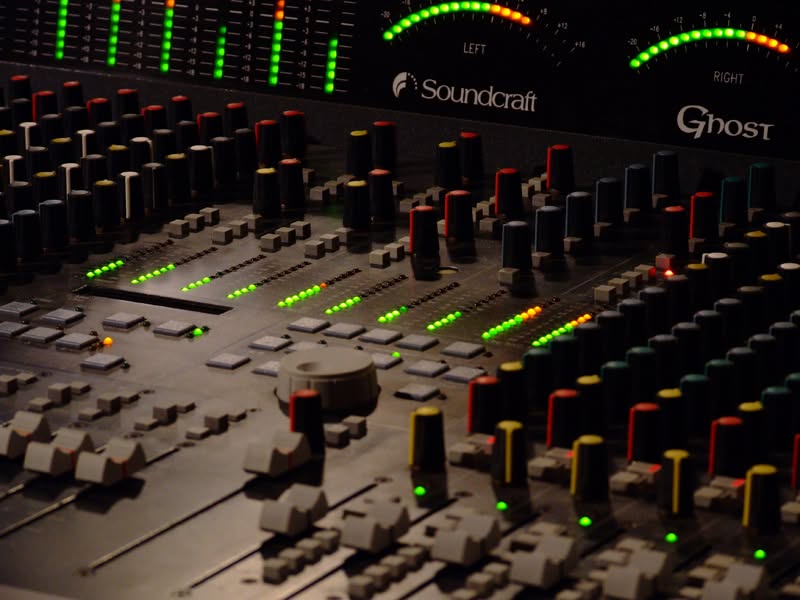
A hybrid studio, part analogue and part digital, built around a 32-channel Soundcraft Ghost console.
- 1 August 2012Alex announces a studio upgrade paid for by the year's music sales: all revenue would "go back into the project instead of spending it on coffee and pizza." The plan: a multichannel sound card feeding an analogue mixer, recording the stereo mix to "regain that analogue warmth, coloration and saturation". Source →
- 3 August 2012Answering a reader, Alex weighs an interface against a mixer: "If I decide to go with an interface it'll most likely be an RME Fireface 800 ... Allen & Heath ZED-R16 is the closest I can find and the most bang for the buck to suit my needs." Source →
- 8 August 2012Part two: "The hunt for setting up a hybrid studio (analog/digital) continues." The post is tagged Alesis X2, Allen & Heath, Mackie 32 8 Bus, Mackie SR40.8, Soundcraft Series Two and Soundcraft Ghost. Source →
- 21 August 2012Part three: "I've finally decided on what mixer board to get. Early tomorrow morning I'll be taking a drive to pick up my “new” little baby, a 32 channel monster console named Soundcraft Ghost." Source →
- March 2013The studio page now lists the Ghost ("32 ch inline mixer with full meeter bridge"), three Echo AudioFire 12 interfaces, a TL Audio Ivory 2 5052, u-he Diva and reFX Nexus 2, the iMac with 32 GB RAM, and a wish list of synths and outboard. Source →
What was in it · 12 pieces
Computer and control
Sound cards and controllers
Mixers and outboard
DJ gear
Software
- AU instruments and effects
- Apple Logic Pro
- reFX Nexus 2
- u-he Diva
On the wish list: Access Virus TI2 Desktop, Clavia Nordrack (v1), Jomox Airbase 99, Korg MS2000R, Lexicon MX400, Lexicon PCM 96, M-Audio Venom, Novation Nova, Roland Juno 106, SPL M/S Master, SPL Stereo Vitalizer Mk II-T.
2015–2017 · Outside Gothenburg
Studio 7
"Located just 15 minutes outside the city center of Gothenburg in a calm tranquil area. The room is 3×4 meters in size." The Ghost 32 had been sold, and Alex was designing his own passive, fully balanced 16-channel summing box. The page also kept a wish list.
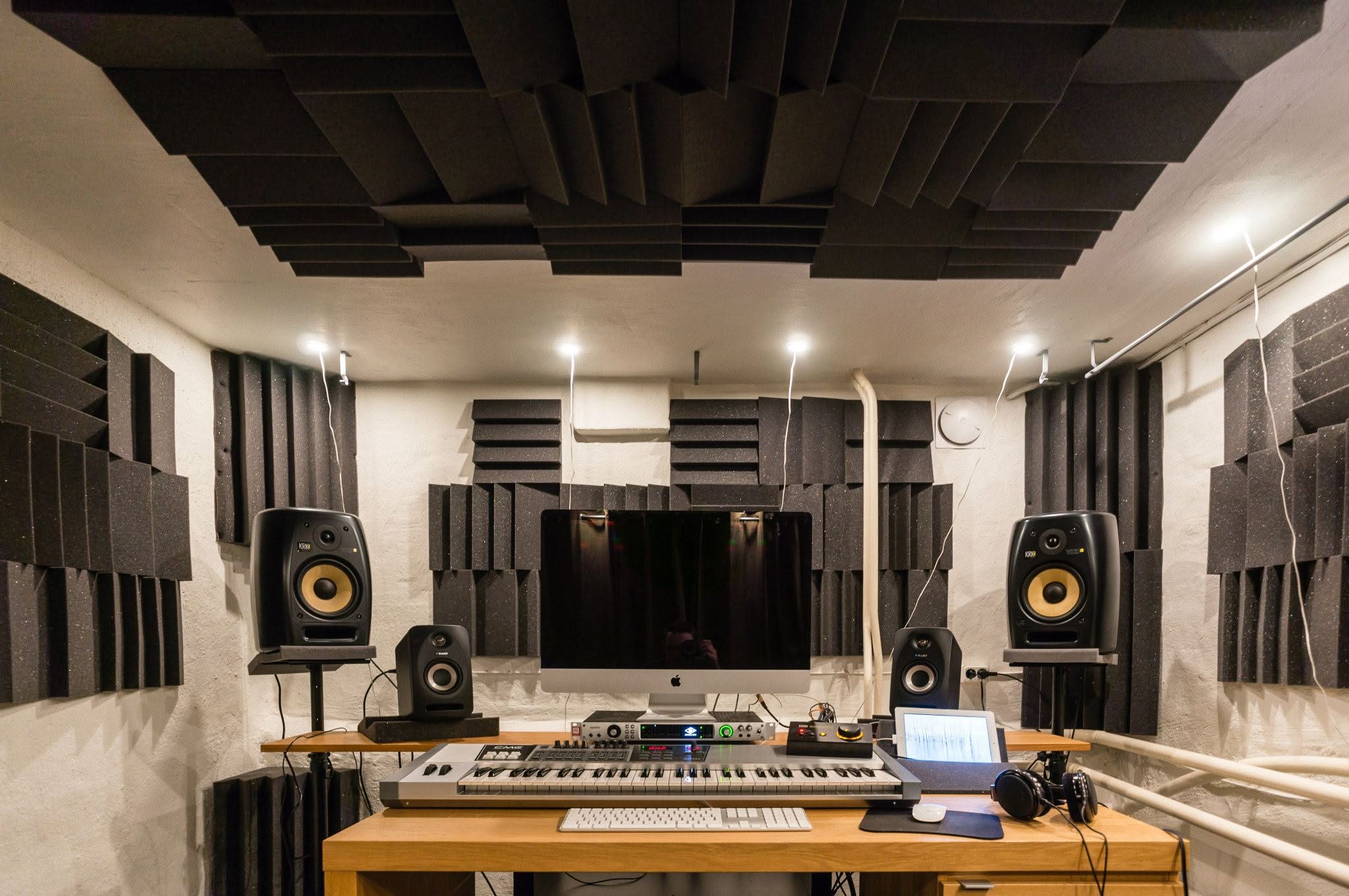
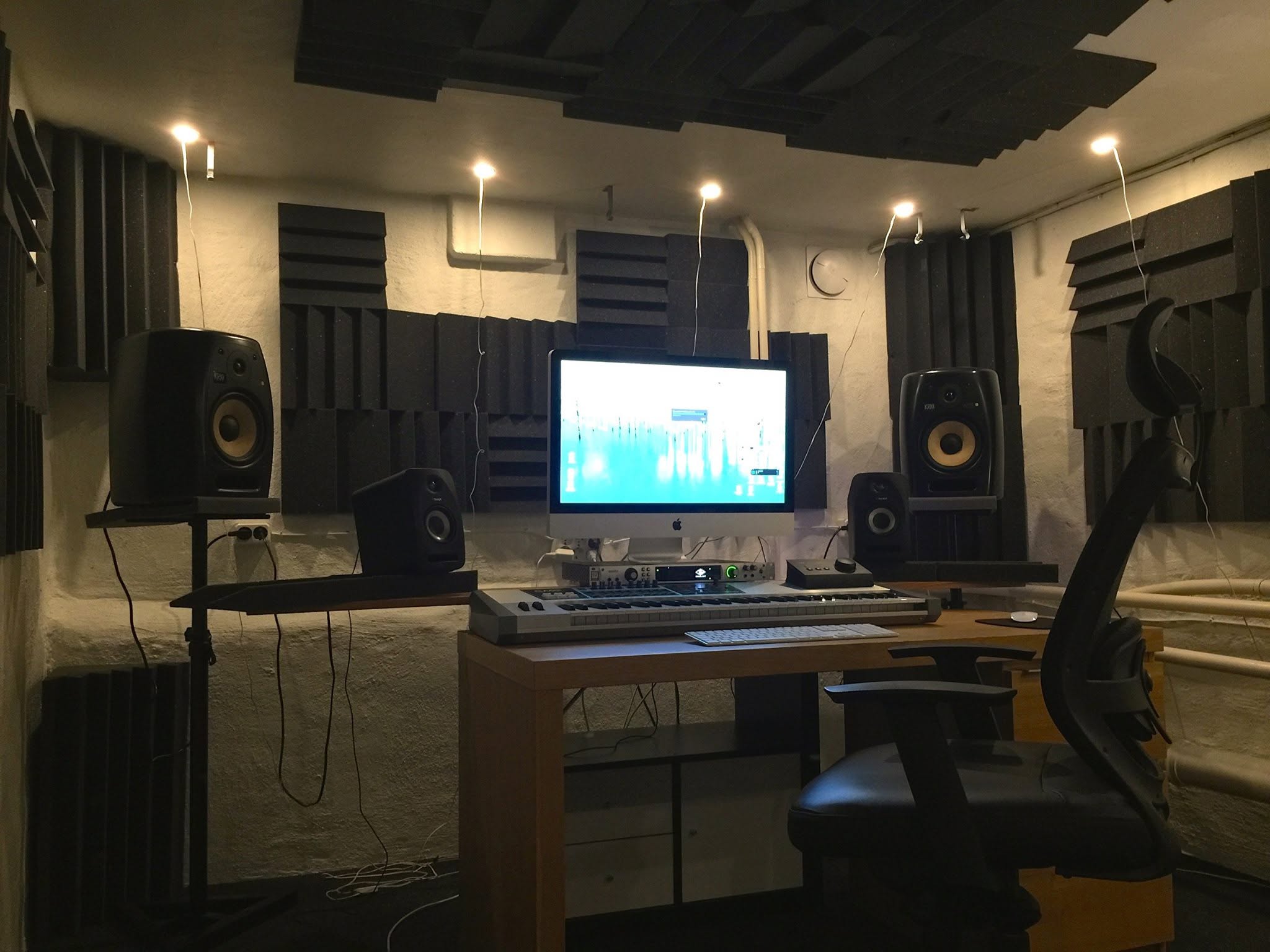
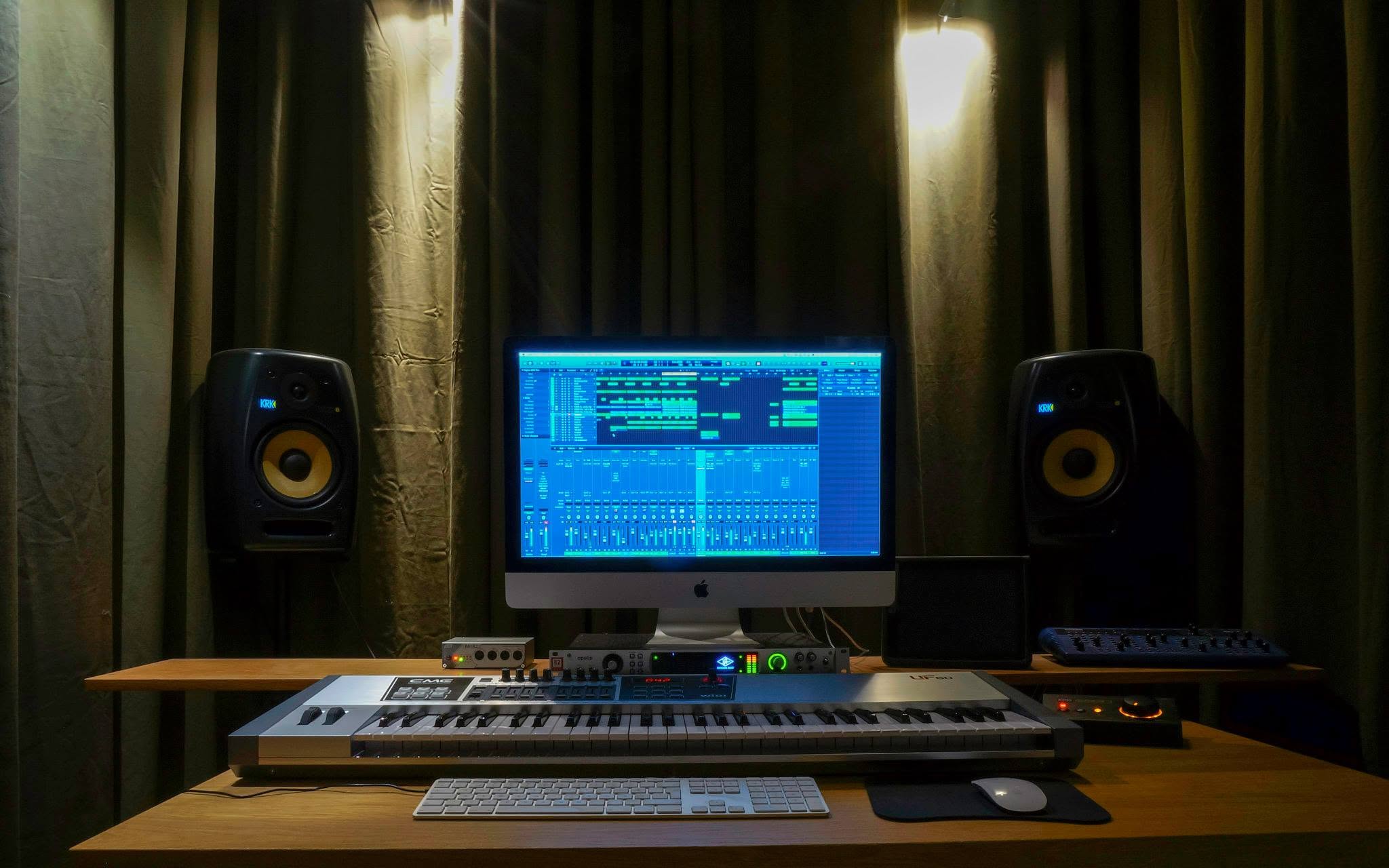
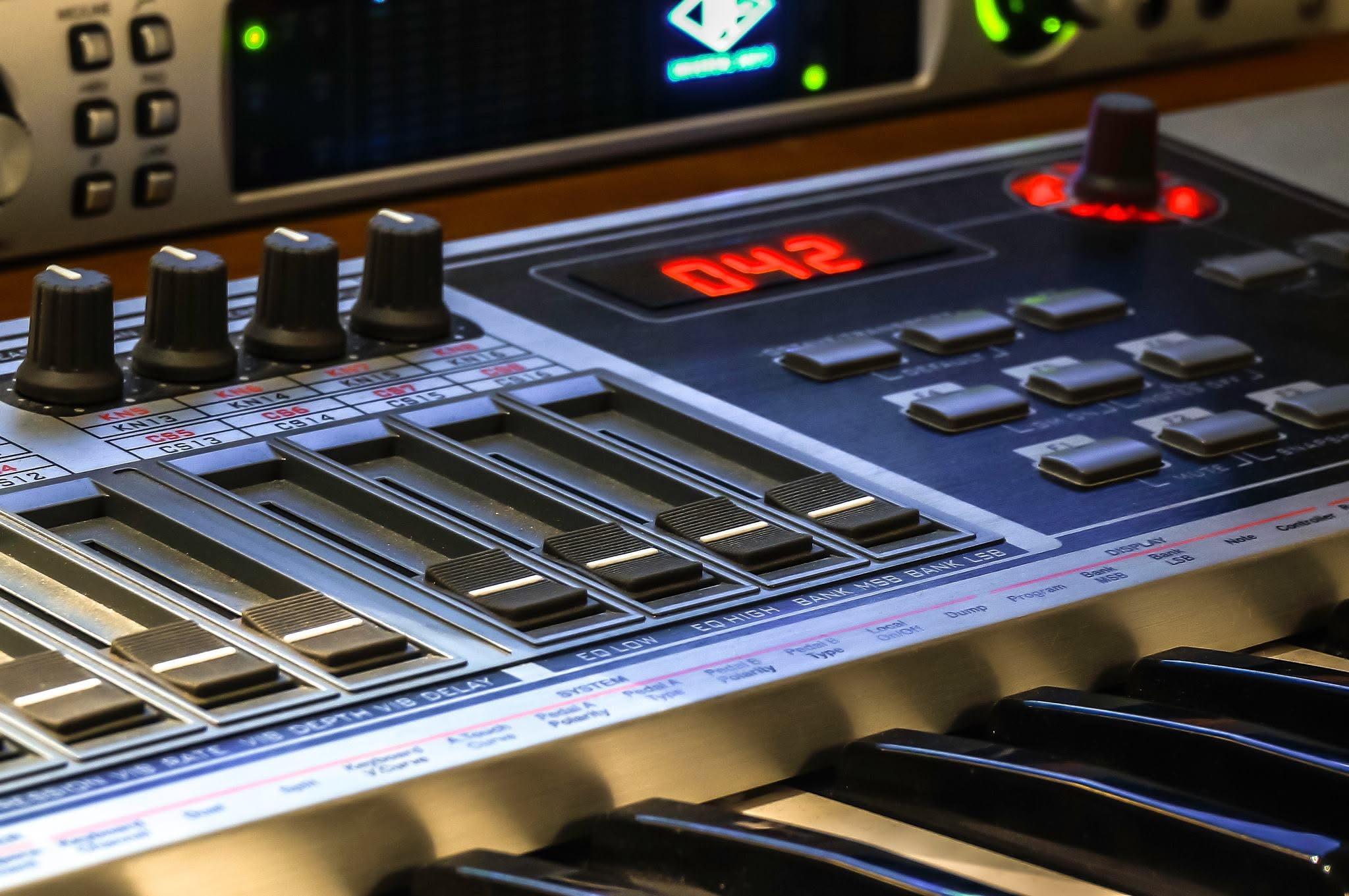
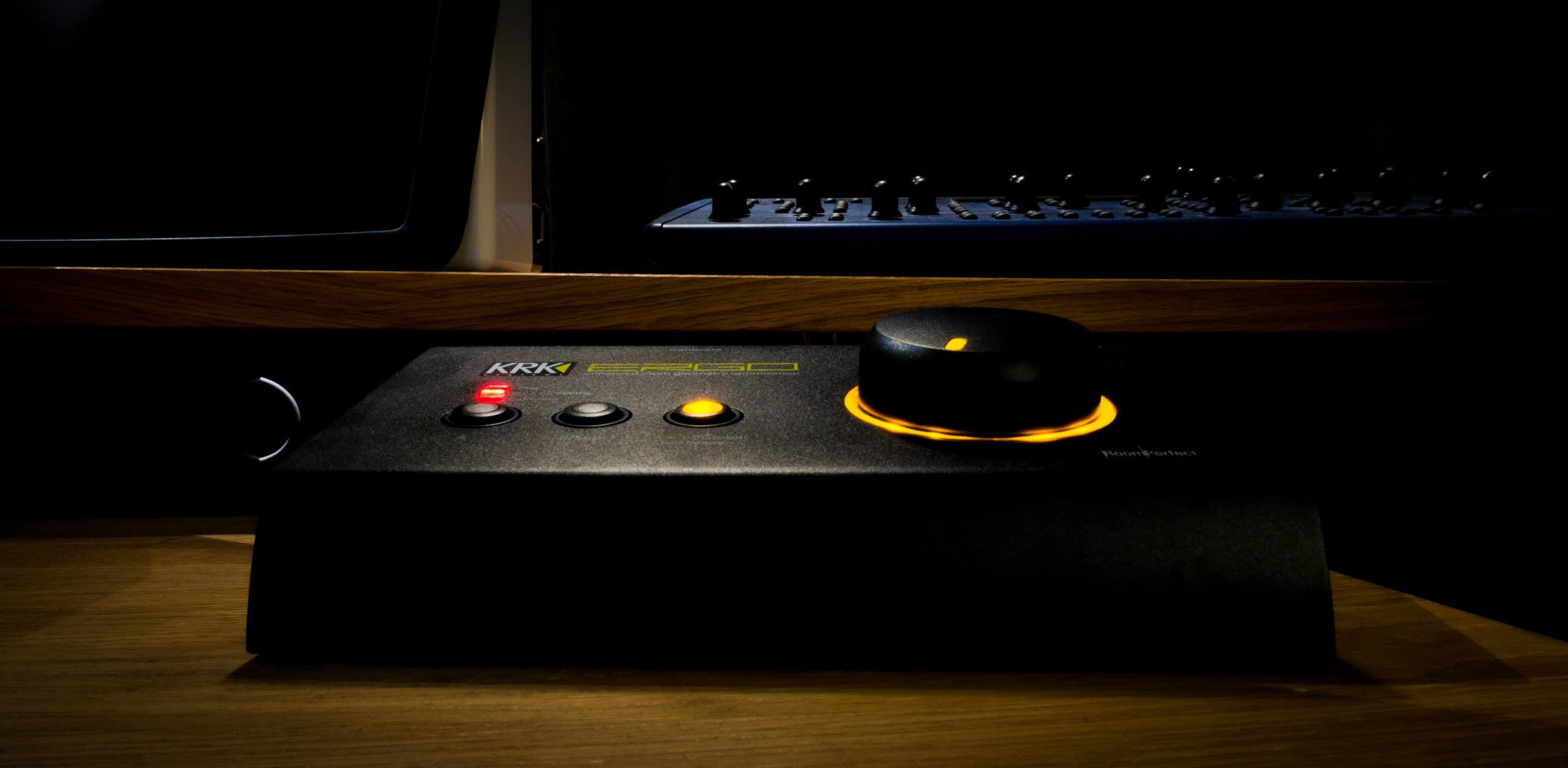
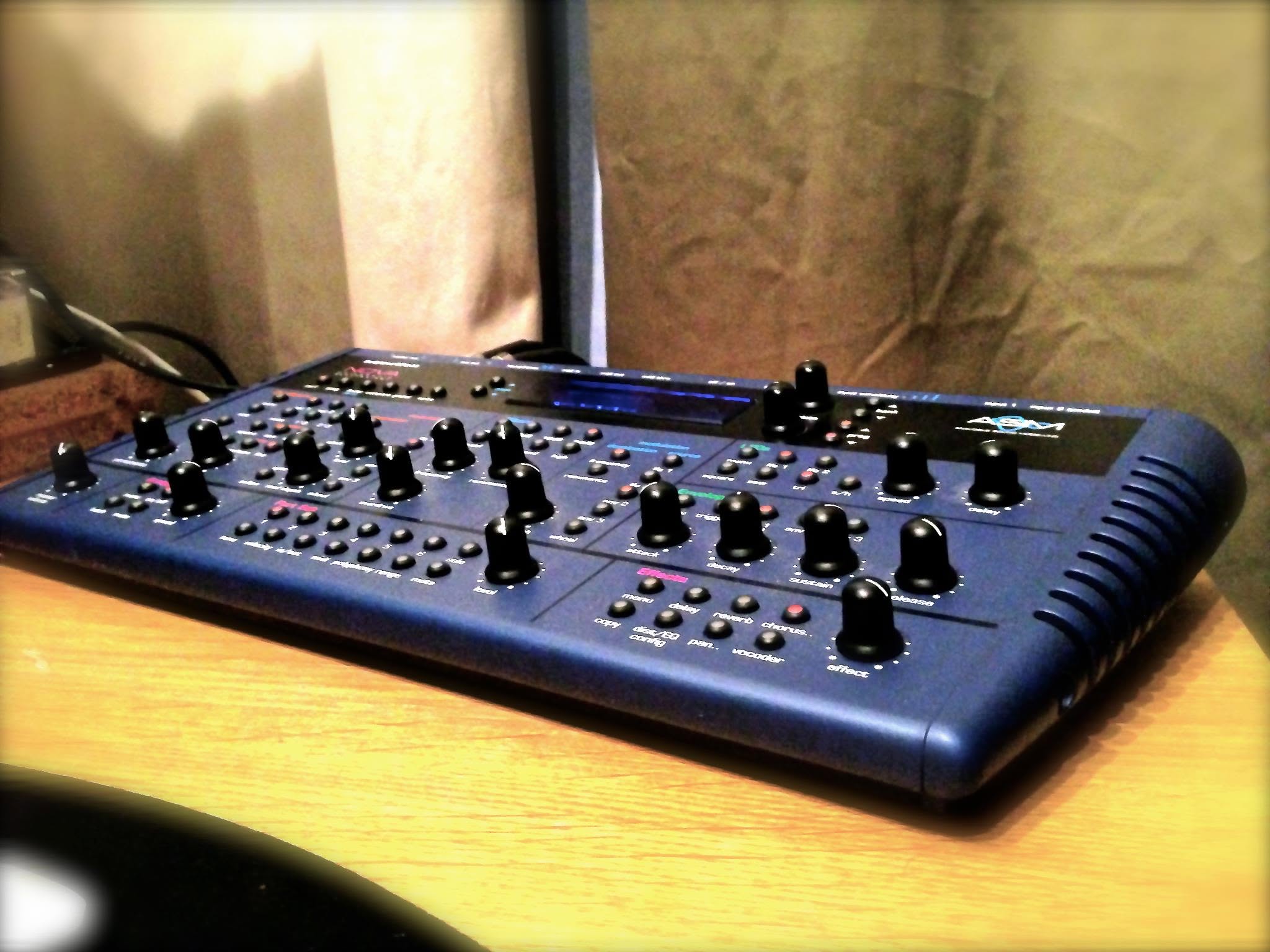
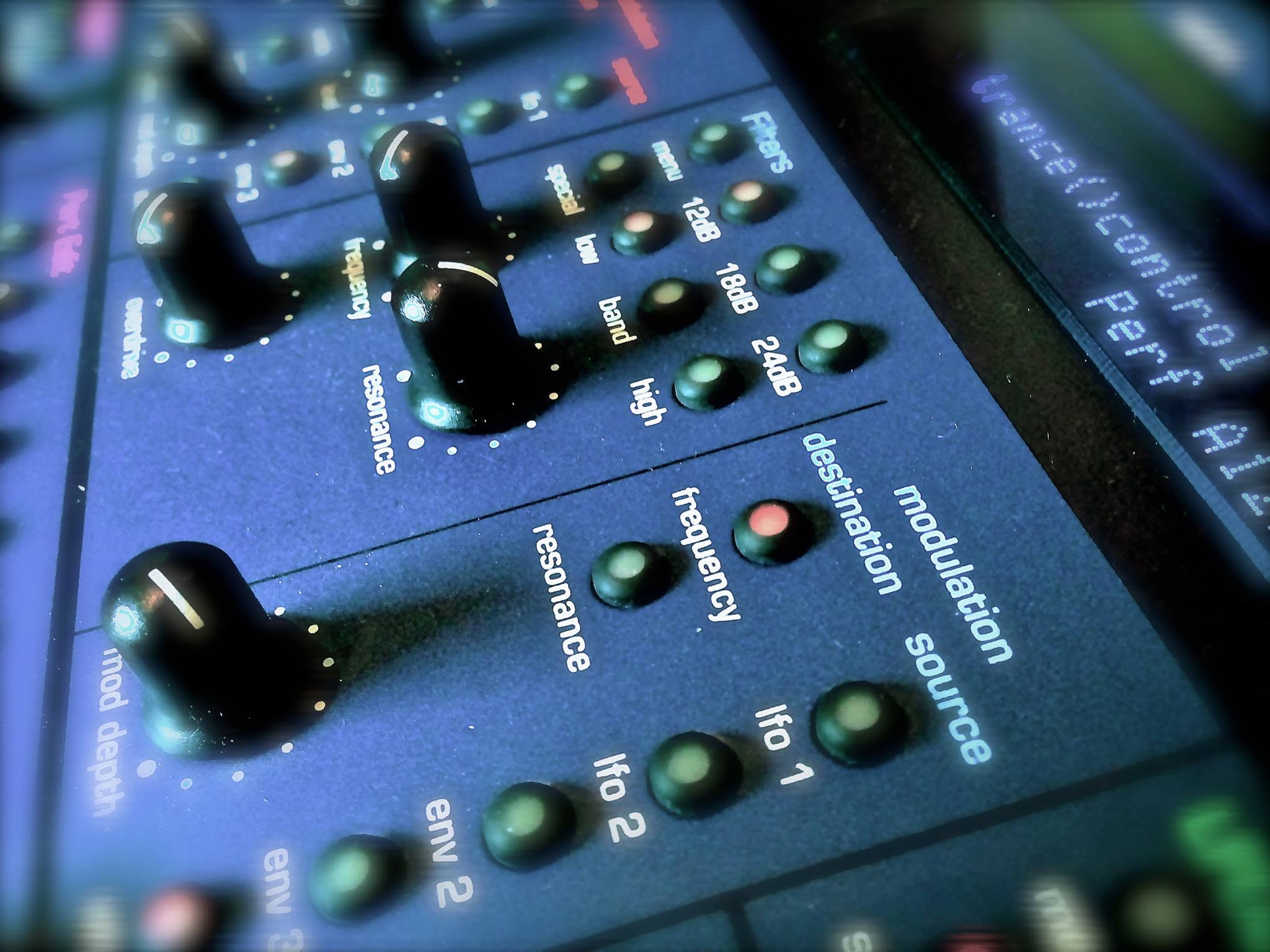
What was in it · 17 pieces
Synths, samplers and drum machines
Computer and control
Sound cards and controllers
Mixers and outboard
Monitoring
On the wish list: Access Virus TI2 Desktop, Clavia Nordrack (v1), Jomox Airbase 99, Korg MS2000R, Lexicon MX400, Lexicon PCM 96, M-Audio Venom, Roland Juno 106, SPL M/S Master, SPL Stereo Vitalizer Mk II-T.
Today
Today
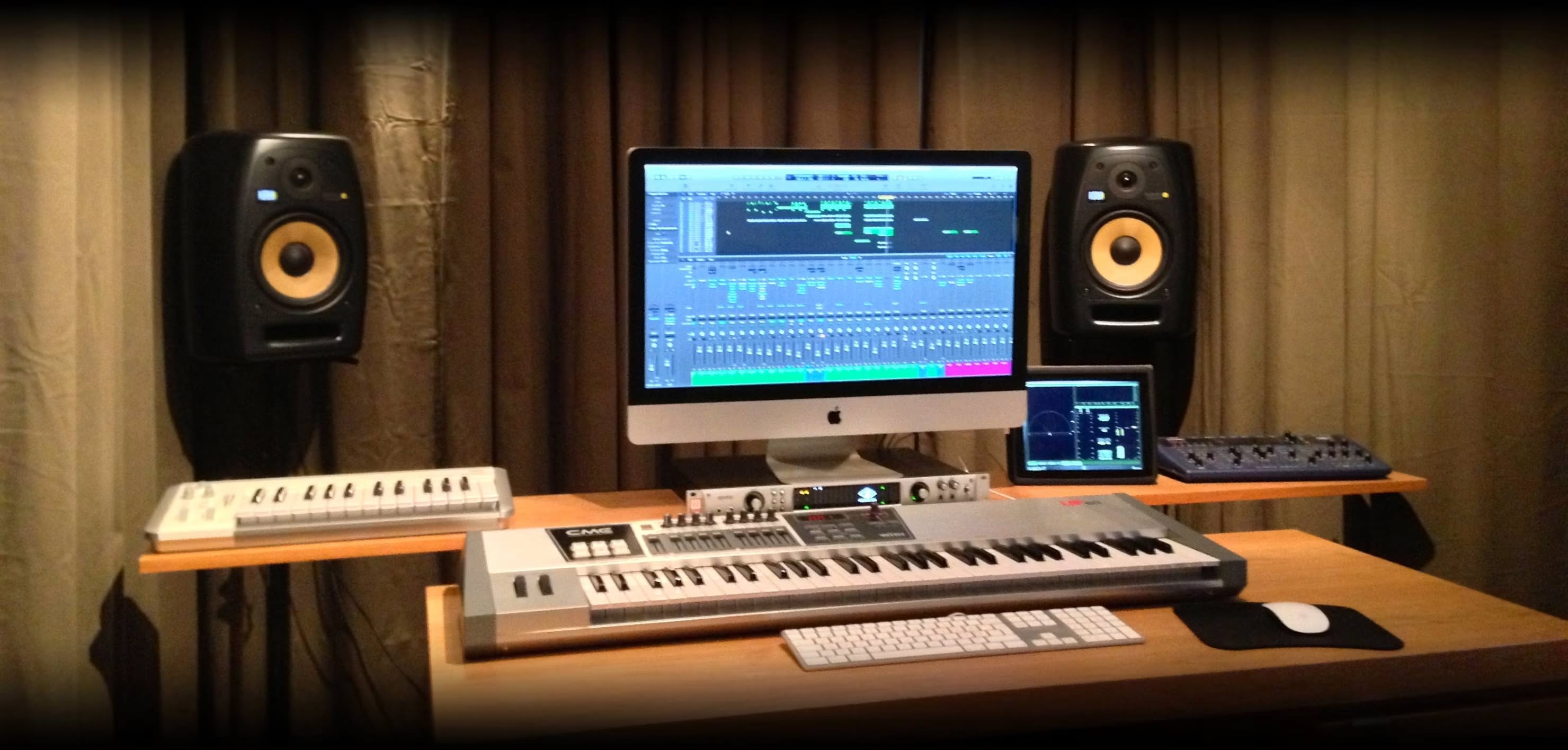
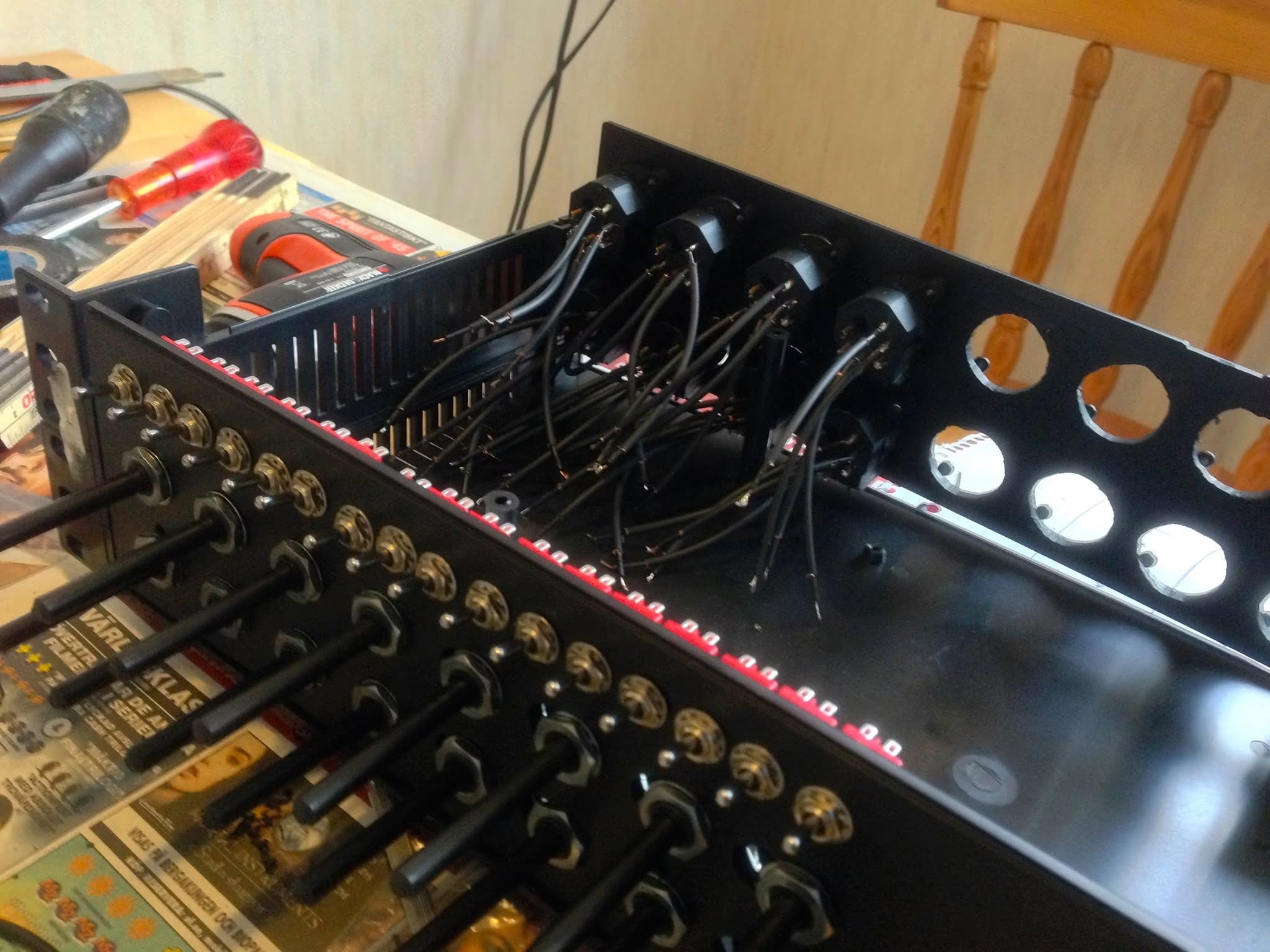
Today the studio is an M-Audio Axiom 61 keyboard and a Novation Nova Desktop, and no computer of its own for music: for the time being the sequencer, the synths and the desk are the lab, in a browser. The passive summing mixer Alexander designed is still not finished.
What was in it · 3 pieces
Synths, samplers and drum machines
- Novation Nova DesktopNot the band's first Nova: that one was sold to a buyer in Norway.
Sound cards and controllers
- M-Audio Axiom 61The studio's keyboard today.
Mixers and outboard
- Passive balanced 16-channel summing systemDesigned by Alexander: M/S processing through Lundahl transformers. Still not finished.